In 1997, we entered the office furniture industry with a vision of combining quality and aesthetics. Since the founding of Casella Office Furniture, we have been making a difference in the industry with ergonomic and stylish furniture that adds value to workspaces. With our expert team and innovative approach, we are committed to providing customized solutions for businesses of all sizes.

- Office & HoReCa Furniture
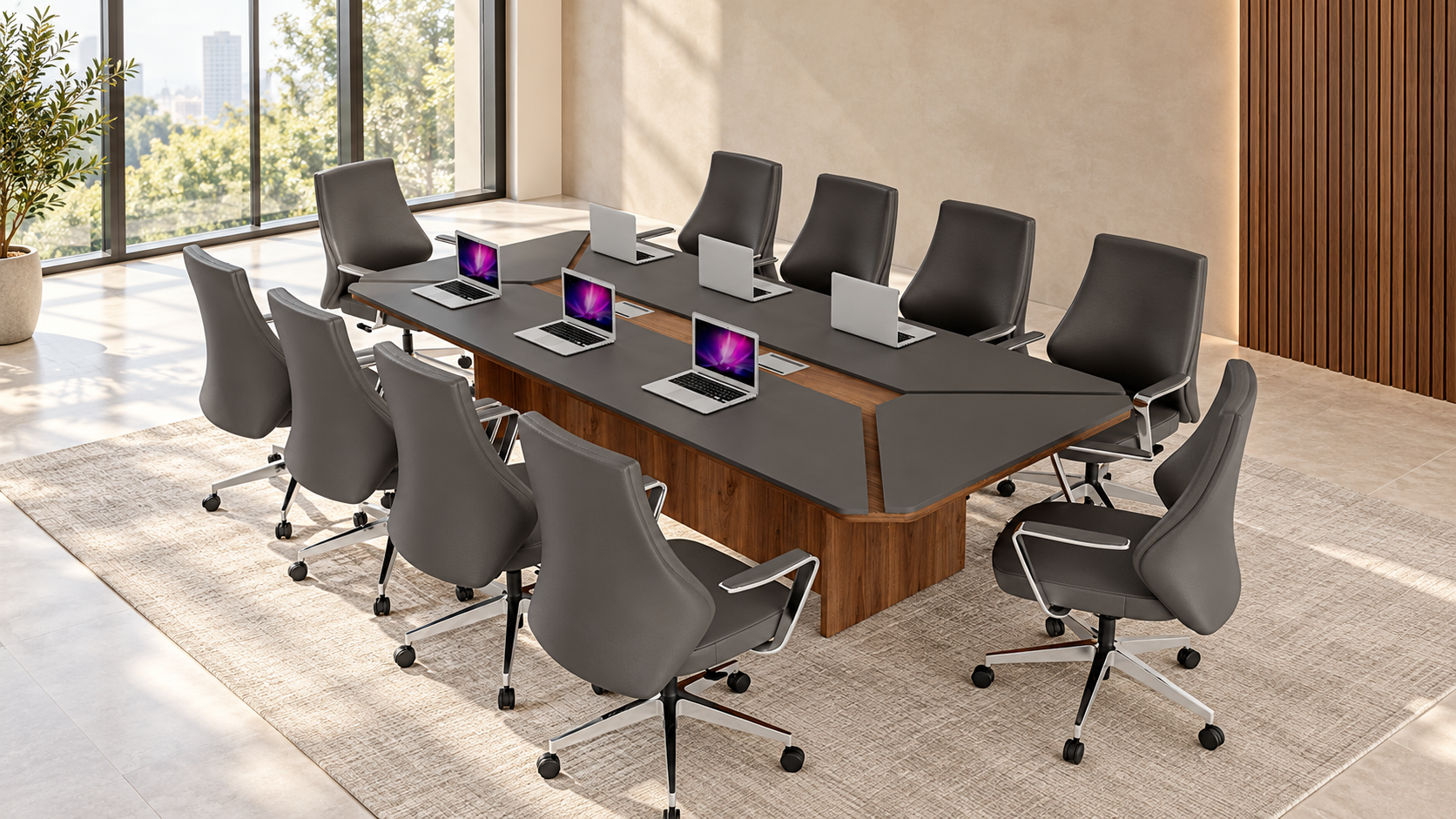
Elevating Corporate Boardrooms: A Strategic Approach to Choosing Conference Tables
Investing in the right conference table transforms an ordinary room into a dynamic hub of efficiency. This comprehensive guide explores everything you need to know about selecting, planning, and optimizing meeting tables for your modern workspace.
1. Why Meeting Tables Are the Strategic Heart of the Office
Every successful enterprise relies heavily on teamwork, open communication, and structured alignment. The physical layout of your boardroom or meeting space significantly influences how effectively ideas are shared and evaluated.
Fostering Active Collaboration and Engagement
A thoughtfully designed table breaks down traditional communication barriers. When participants sit in an ergonomic, well-structured arrangement, eye contact improves, body language opens up, and every attendee feels actively included in the discussion. This direct engagement directly translates into more creative problem-solving and faster project execution.
Projecting Uncompromised Professionalism
First impressions matter profoundly in business. When prospective clients, investors, or global partners visit your headquarters, the boardroom is often where critical deals are finalized. A sleek, high-end meeting table builds instant trust, reinforces your brand's authority, and signals that your company values quality down to the smallest detail.
Seamless Technological Integration
Modern meetings are inherently hybrid and digital. Today's top-tier conference tables are engineered for the modern tech landscape, featuring integrated power outlets, USB-C charging ports, HDMI pass-throughs, and concealed cable management systems. This ensures presentations, video conferences, and multi-device workshops run seamlessly without messy wire clutter.
2. Anatomies and Key Types of Meeting Tables
Different spaces and organizational cultures demand specialized solutions. Before purchasing, it is essential to understand which category of meeting table aligns best with your company’s operational style.
Executive Conference Tables (Boardroom Standards)
Designed specifically for leadership meetings, boardrooms, and high-stakes executive decisions.
-
Characteristics: Built with heavier, imposing structures using rich wood veneers, tempered glass, or refined metal accents. They command authority and provide an atmosphere of stability and long-term vision.
-
Aesthetic Focus: Premium finishes, integrated leather inlay options, and massive footprints designed to anchor large architectural spaces.
Modular and Flexible Meeting Tables
Ideal for modern creative agencies, dynamic tech companies, and collaborative training environments.
-
Characteristics: Composed of movable, modular segments that can be effortlessly reconfigured, joined together, or folded away.
-
Versatility: Allows a single room to transition within minutes from a large town-hall setup into individual workshop clusters or a compact board meeting layout.
Compact Huddle Room Tables
For quick, spontaneous brainstorms, stand-up syncs, and agile team catch-ups.
-
Characteristics: Smaller round or square tables designed to maximize efficiency in limited office footprints, encouraging intimacy and rapid idea exchange.
3. Essential Factors to Evaluate When Choosing a Meeting Table
Purchasing corporate furniture is a long-term capital investment. To avoid costly mistakes, evaluate your requirements through strict architectural and functional criteria.
Precise Space Planning (Room Dimensions)
Before finalizing any purchase, map out your room dimensions accurately.
-
Always leave a minimum clearance of 90 to 120 centimeters of open walking space around the entire perimeter of the table to allow chairs to slide back comfortably and ensure unobstructed movement paths.
-
Factor in architectural elements such as pillars, radiator placements, and entry doors.
Material Durability and Surface Finish
The choice of material dictates both visual appeal and lifespan under intensive daily use:
-
Melamine-Faced Chipboard (MFC): Highly resistant to scratches, budget-friendly, and simple to clean—ideal for high-traffic training and meeting rooms.
-
MDF with High Gloss or Wood Veneer: Delivers an elite, sophisticated look perfect for executive suites.
-
Structural Steel and Aluminum Frames: Provide rigid, wobble-free support for heavy tabletops and integrated electrical boxes.
Shape Selection Based on Meeting Dynamics
-
Rectangular or Boat-Shaped Tables: Best for formal presentations where one person (a leader or speaker) naturally leads the room.
-
Round or Oval Tables: Perfect for egalitarian discussions where all participants share equal footing, ideal for creative and collaborative teams.
Frequently Asked Questions (FAQ)
1. How do I determine the right size meeting table for my room?
Measure your room's total usable length and width, then subtract at least 2 meters from each dimension to account for chair clearance and walking space. This gives you the maximum boundary dimensions for your table.
2. Are modular meeting tables durable enough for daily corporate use?
Yes. Modern modular mechanisms use heavy-duty locking casters and robust steel connecting brackets that provide the same structural stability as fixed, permanent tables while offering unmatched flexibility.
Conclusion
Choosing the right meeting tables is a strategic investment in your company’s communication efficiency and professional brand image. By balancing functional technology, durable materials, correct spatial planning, and ergonomic design, you create an environment where great ideas successfully transform into action.
Contact
- Tel
- +381 66 8117989
- info@casella.rs
- Address
- Bulevar heroja sa Košara 8a, 11070 Novi Beograd